Missing here: Panasonc G1 + Lumix 20/1.7 + Rokinon flash (as I used these to take the picture)
I’ve had my fair share of cameras, both digital and analog, in recent years. Which is both good and bad. Good, because I learned a lot about photography — both from the technical as well as the artistical standpoint –, and bad, because at times I found myself in a constant loop of buying and selling. I spent a lot of money on different pieces of equipment, just to sell it with loss afterwards. And while searching for that one, perfect, ultimate camera kit, I figured something out. It’s not the gear that makes you happy. It’s the pictures you take. So I made a rather bold decision, namely to sell my beloved Leica M8. Not because it didn’t take good pictures, or because I didn’t enjoy using, but because I figured that I didn’t need such an expensive piece of technology to take great pictures. Quite on the contrary, in fact. What, then, is in my bag now? Read on to find out!
[click to continue…]

The Micro Four Thirds system has the biggest choice of lenses of all mirrorless systems so far.
The holiday season is just around the corner, so it’s time to think about the right gear for your holiday pictures. If you’re a Micro Four Thirds user, you’re in a lucky position, as we have seen a whole slew of new lenses for the system in this year — in addition to the great lenses we already had. So no matter whether you’re on the search for a lens to use yourself, or for one to give away to someone for Christmas — this guide will help you pick one (or two, or more) from the vastness of glass that is available for the system by now.
[click to continue…]

Andrew Chan from SLR Magic at photokina 2012, holding a Fuji X-Pro 1 equipped with their new 35mm T0.95 cine lens.
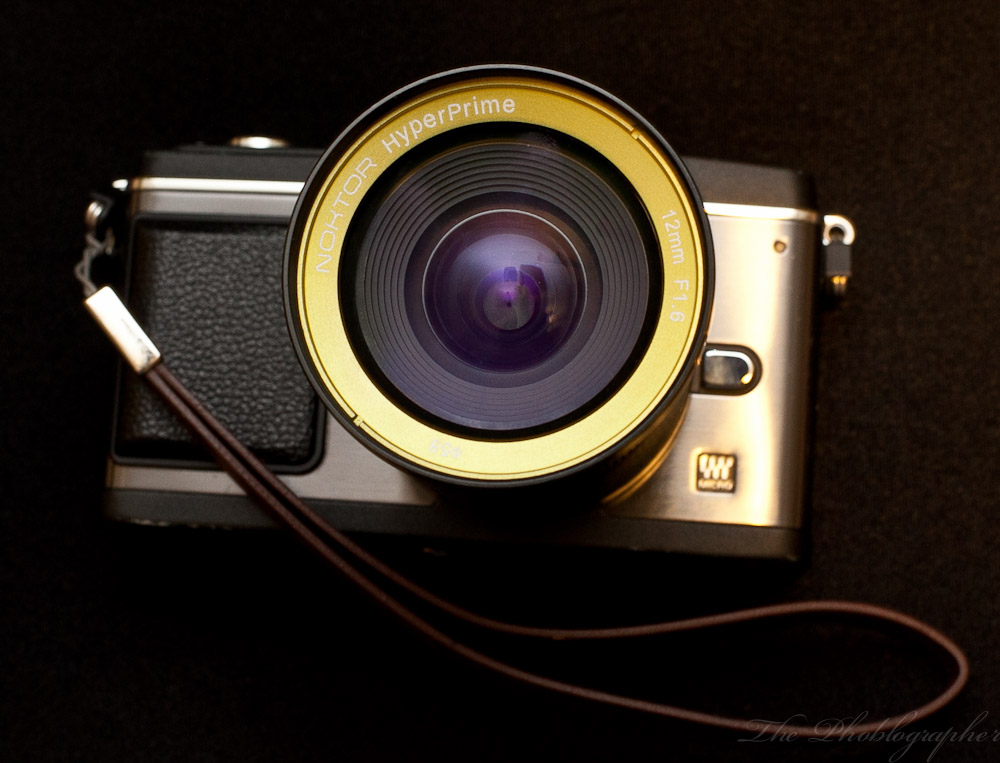
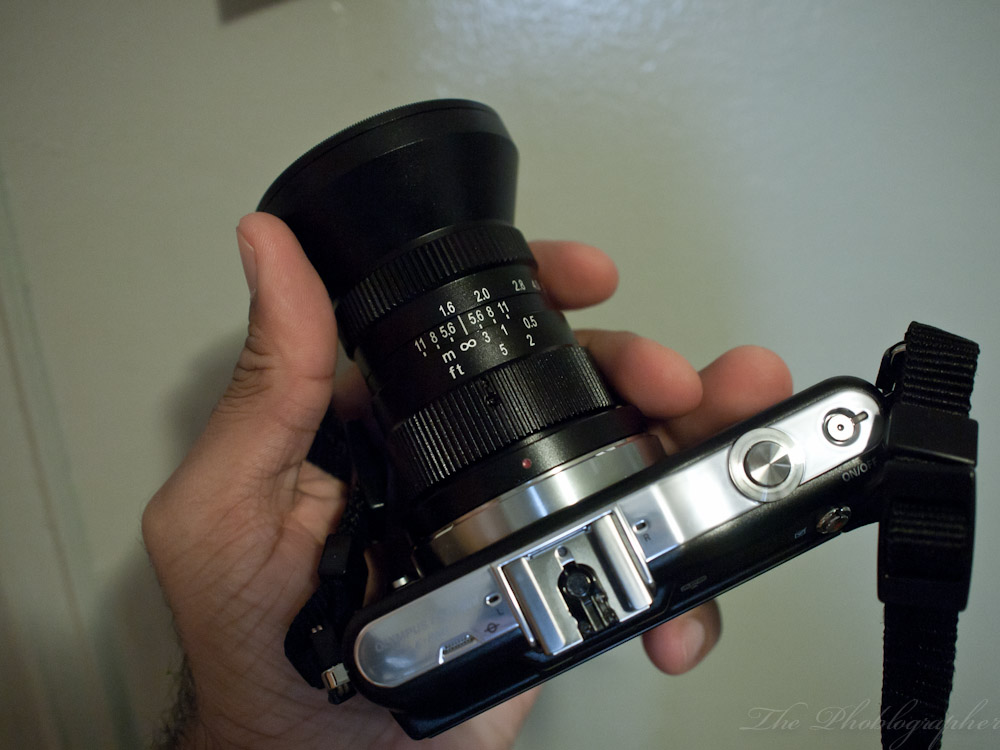
With much regret, we recently learned of the news that SLR Magic, the company that brought us the 12mm f1.6 HyperPrime for Micro Four Thirds and the 50mm T0.95 HyperPrime for Leica M, will discontinue all development of M-mount lenses. In an official press release, the company states that this decision has been made due to a lot of negative feedback on the 50mm T0.95 HypePrime for Leica M.
[click to continue…]

First a Ferrari, and now beer. What on earth does this have to do with photokina? Well, every day at 3 p.m. the guys from Peak Design (read more on their awesome products below) were giving out Freibier. This was their PR strategy, and you can bet it was well received!
This is part six of our photokina 2012 report, with a main focus on SLR Magic, the small lens maker from Hong Kong that has come up with a lot of amazing products in the last two years. Beside an exhaustive report on SLR Magic’s new lenses, the following companies and/or products are featured in this post: Alpa, B.I.G. Photo, Fotoman, the Impossible Project, Lensbaby, Peak Design, the Plustek 120 film scanner, Rollei, and SanDisk.
[click to continue…]

Black Magic just announced a Micro Four Thirds version of their already popular Cinema camera. In my honest opinion, it should have been Micro Four Thirds mount to begin with. The mount, though, is passive, which means that electronics will not work. So for the most part, say goodbye to most of your Micro Four Thirds lenses.
But there are some that will natively work with no problems at all. Being the hackers that Micro Four Thirds users are, though, everyone tries to find old and alternative glass to hack onto their camera bodies. Because of this, nearly any lens you can think of has been adapted to the format.
Here’s a list of some glass that you may want to check out:
[click to continue…]

The Panasonic G1 + 14-45mm kit lens. Oldie but Goldie?
When the Panasonic G1 was introduced in late 2008, it marked the beginning of a completely new camera system called Micro Four Thirds. What set this system apart from most other interchangeable-lens systems of that time was its lack of a swing mirror and optical viewfinder, thus drastically reducing the flange-back-distance (distance from mount to sensor) and making possible a much more compact design of both camera body and lenses. When the Micro Four Thirds system was first introduced to the public, no one had any idea that in a few years from then, mirrorless electronic viewfinder systems would become serious competitors to DSLRs. Rather, it was an interesting idea that Olympus and Panasonic had conceived, but it would remain to be seen if this was more than just a neat gimmick.
[click to continue…]